

A Visual Guide to Semi-Truck Blind Spots & No-Zones
Sharing the road with semi-trucks comes with added risk. Their size and height create blind spots, or “no-zones,” around the front, back, and sides, increasing the risk of collisions with passenger cars.
This is especially important in busy metro areas like Atlanta, where highways such as I-285, I-75, and I-20 see heavy truck traffic. Knowing where a truck’s blind spots are can be the difference between a safe drive and a serious crash.
In this guide, we’ll break down the types of semi truck blind spots to watch for and offer safe driving tips for both truck drivers and everyday motorists.
What Are Semi-Truck Blind Spots (No-Zones)?
Semi-trucks are large, complex vehicles, and their size creates significant blind spots, also called “no-zones.”
So, what is a no zone? These zones are areas where the truck driver has limited or no visibility, making it difficult to see surrounding vehicles. Unlike passenger cars, trucks have long trailers, taller cabins, and mirror limitations that all contribute to semi truck blind spots.
While truck drivers can’t eliminate no-zones, knowing where they are helps everyone stay safer on the road. If a blind spot caused a crash, a truck accident lawyer in Atlanta can help protect your rights.
The Four Major Semi Truck No-Zones
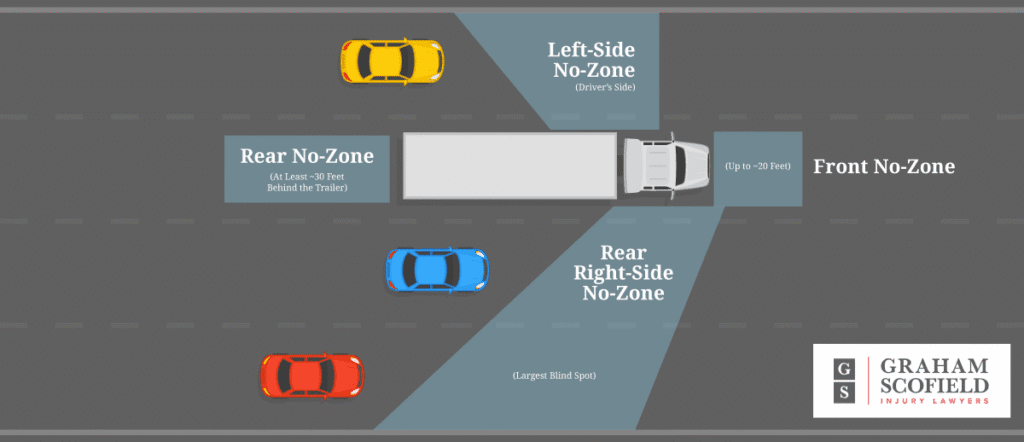
How many blind spots does a semi truck have? There are four main no-zones around every truck. Knowing where these areas are can help you avoid dangerous situations on the road.
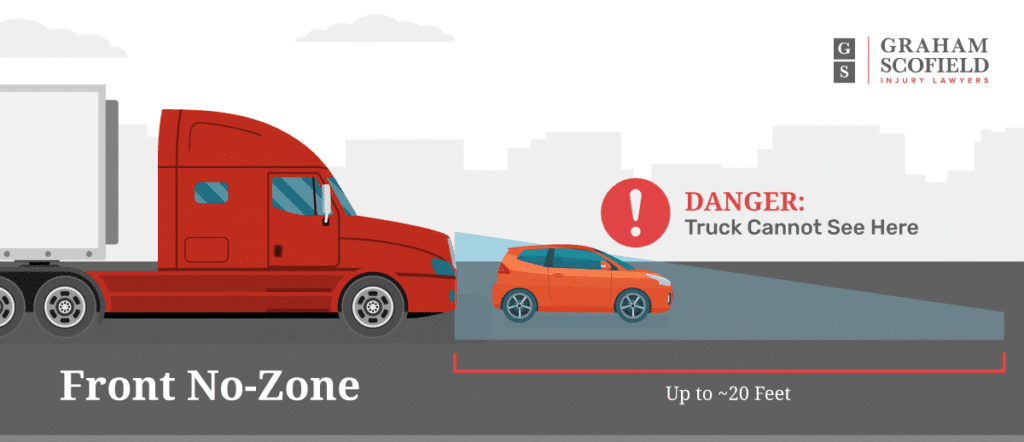
Front No-Zone (Up to ~20 Feet)
The height of a semi truck can make objects directly in front disappear from the driver’s view. Cutting in too closely after passing is a common hazard.
Common crash type: Often leads to rear-end collisions when cars brake suddenly, and truck drivers can’t react in time.
Safety Tip: Always leave at least 20 feet of space when passing a semi truck and avoid cutting in too quickly.
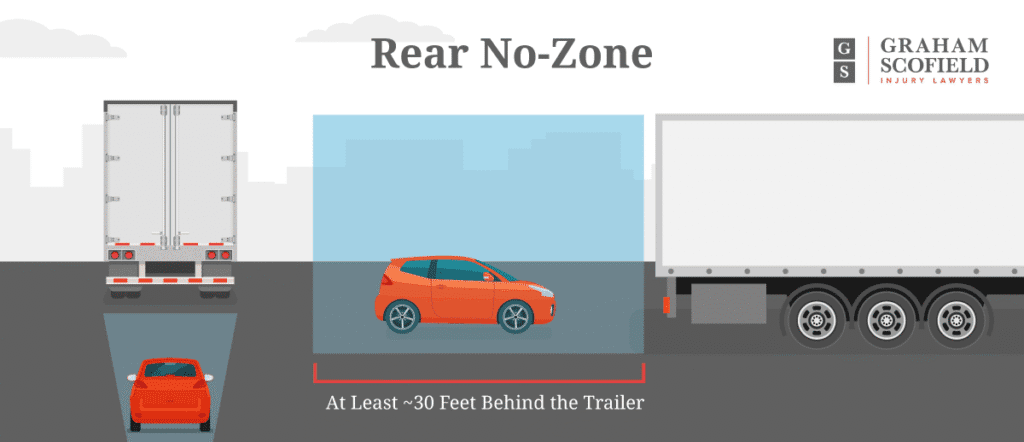
Rear No-Zone (At Least ~30 Feet Behind the Trailer)
Trucks don’t have rearview mirrors, which creates a blind spot up to 30 feet behind the trailer. Tailgating reduces reaction time and increases the risk of crashes.
Common crash type: Rear-end collisions often happen when cars brake suddenly in front of a truck, which can’t stop as quickly as a smaller vehicle.
Safety Tip: Keep a safe following distance when driving behind a truck to stay out of the rear no-zone.
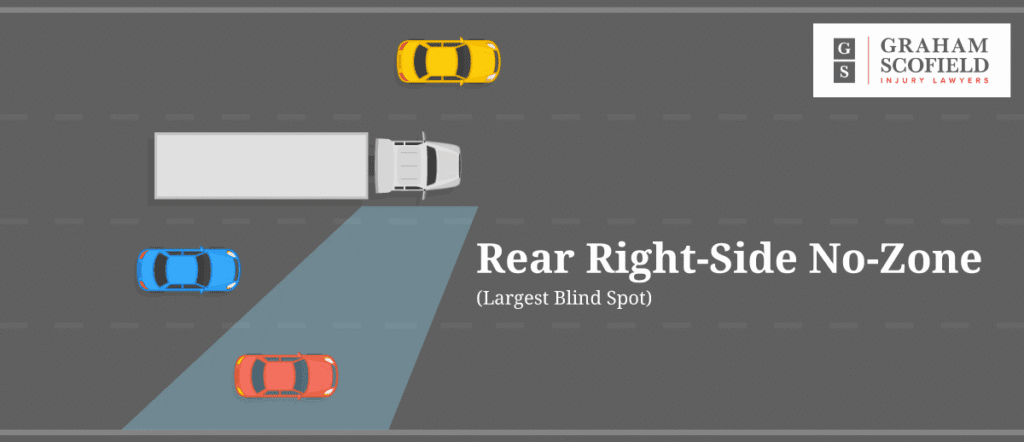
Rear Right-Side No-Zone (Largest Blind Spot)
The rear right-side no-zone is the largest blind spot on a semi-truck, often covering one to two lanes. This area is especially hazardous when the truck is turning or maneuvering.
Common crash type: Sideswipes and right-turn squeeze accidents commonly occur when smaller vehicles try to pass on the truck’s right side.
Safety Tip: Avoid lingering on a truck’s right side, especially when it’s preparing to turn.
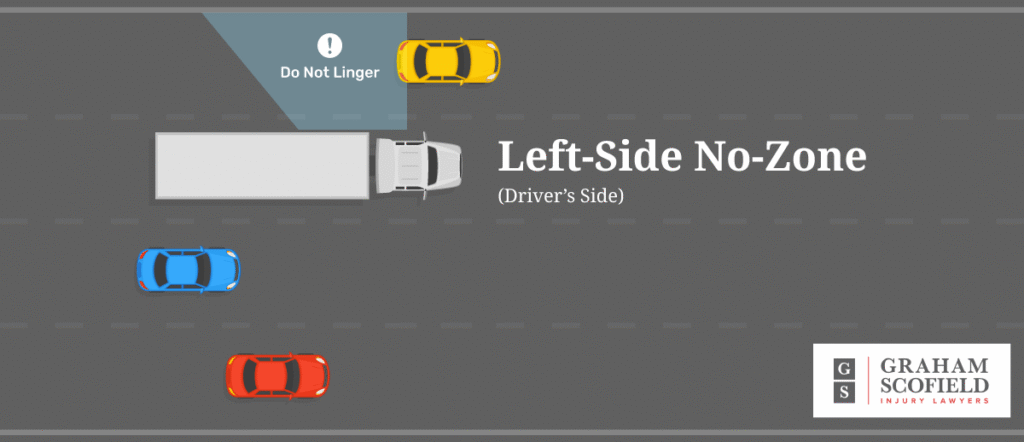
Left-Side No-Zone (Driver’s Side)
Smaller than the right-side no-zone but still dangerous, the left-side no-zone extends from the cab door toward the mid-trailer. It’s easy to overlook, especially when passing a truck on the left too closely.
Common crash type: Vehicles passing on the left can get caught if the truck suddenly veers left, leading to side-impact collisions.
Safety Tip: Pass quickly and maintain a steady speed when passing on the left side.
How To Stay Out of a Truck’s Blind Spots
Here are essential safety tips to help you stay out of semi truck blind spots:
- If you can’t see the driver’s face in their mirror, they can’t see you.
- Pass on the left whenever possible to avoid the larger right-side no-zone.
- Avoid driving directly beside the trailer for extended periods.
- Leave extra space in rainy weather, especially in Georgia’s frequent downpours, to account for longer stopping distances.
Why No-Zones Matter in Truck Accident Claims
Understanding semi truck blind spots and no-zones is important for both safety and liability in truck accident claims. This knowledge can help show what caused a truck accident and who may be at fault.
Key factors include:
- Vehicle Positioning:
Where a car is located relative to a truck’s no-zone can impact responsibility. Being in a blind spot may affect who is considered at fault. - Comparative Negligence in Georgia:
Georgia follows a comparative negligence rule. If you were partially at fault, such as driving in a truck’s blind spot, your compensation could be reduced proportionally. - Critical Evidence:
- Dash Cams: Show the sequence of events leading to the crash.
- Witness Statements: Observations from drivers or pedestrians can support your case.
- Truck Black Box Data: Provides info on speed, braking, and truck actions before the accident.
Who Can Be Liable in a Blind Spot Truck Crash?
Liability in a blind spot truck crash can fall on several parties, including:
- Truck Driver: Failing to check mirrors or making unsafe maneuvers.
- Trucking Company: Not properly training drivers or maintaining trucks.
- Maintenance Providers: Mechanical issues caused by poor maintenance.
- Cargo Loaders: Improperly loaded cargo that affects visibility or handling.
Recommended Reads for Accident Victims
A Visual Guide to Semi-Truck Blind Spots & No-Zones

Georgia’s “Holt Demand” in 2026: Rules for Settling Your Georgia Injury Claim

Road Rash Is More Than a Scrape: Seeking Compensation for Permanent Scarring

Common Car Accident Scams and Fraud in Georgia — What Drivers Should Know
How Road Rage Incidents Impact Car Accident Claims in Atlanta
What Are Your Legal Options After a Rollover Car Accident in Georgia?
Semi-Truck Traffic in Atlanta: Why Awareness Is Critical
Atlanta is a major logistics hub, with many of the nation’s largest freight carriers passing through the city. Key highways like I-285, I-75, and I-20 see heavy semi truck and commercial vehicle traffic.
With so many trucks on the road, all drivers must be aware of no-zones to protect their safety and that of other drivers on the road. Failing to recognize semi truck blind spots can lead to serious, often preventable accidents.
Injured in a Semi-Truck Accident in Atlanta?
Semi truck blind spots can be the difference between a close call and a serious accident. Awareness of “no-zones” and safe driving practices can help prevent truck crashes that lead to major physical, emotional, and financial challenges.
If you’ve been hurt in a truck accident in Atlanta, having an experienced legal team on your side makes all the difference. At Graham Scofield Injury Lawyers, we know Georgia’s trucking laws and how no-zone accidents affect claims. We’ll review your case and fight for the compensation you deserve.
Reach out today for a free consultation and get the guidance you need.
Frequently Asked Questions About Truck Blind Spots
How far do truck blind spots extend?
The distance of a truck’s blind spot can vary, but generally, the front no-zone extends up to 20 feet, while the rear no-zone extends 30 feet. The largest blind spot is on the right side, which can span one or two lanes.
Which side of a truck has the largest blind spot?
The right side of the truck has the largest blind spot, often covering one to two lanes. It is particularly dangerous during turns.
Can truck drivers see cars directly behind them?
No, truck drivers have limited visibility behind their trucks because they lack rearview mirrors. This makes tailgating a truck extremely dangerous.
Are modern trucks equipped with blind-spot monitoring systems?
Many modern semi-trucks come equipped with blind-spot monitoring systems to alert drivers of vehicles in their blind spots. However, drivers should always exercise caution when driving near semi trucks.
What should I do if I’m hit by a semi truck in Atlanta?
If you’re involved in a semi truck accident, call 911 and seek medical attention immediately. Take photos of vehicle damage, road conditions, and injuries, and collect witness contact information. Obtain the police report and avoid speaking with insurance adjusters. And contact a truck accident attorney in Atlanta as soon as possible to preserve evidence and protect your rights.

Graham Scofield
Atlanta Personal Injury Lawyer
Graham Scofield is a skilled trial lawyer and a fierce advocate for injury victims and employees’ rights.